Plan a UK data centre the grid, the planners and a heat network can all back
UK data centres are now Critical National Infrastructure, and the AI Growth Zones are bringing large new load onto a grid where connection queues are the real constraint. Sympheny models the whole energy system, power, cooling, on-site generation and storage, alongside the waste-heat-to-heat-network case, and optimises it on cost against CO₂ before anything is fixed.
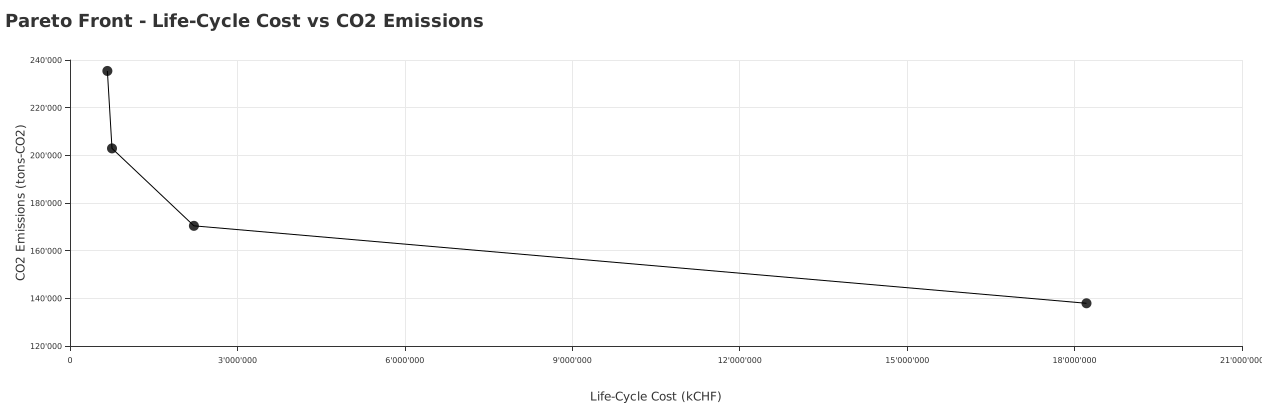
Cost-versus-carbon trade-off for a data-center energy concept, with each point a fully costed system option.
Grid connection and approval, not efficiency, decide UK data centres
The grid connection is the bottleneck
New UK data centres, including the large loads landing in the AI Growth Zones in Oxfordshire, South Wales and the North East, are meeting long connection queues and constrained capacity. On-site generation, storage and demand flexibility decide how big the connection request has to be and how quickly the site can run. Those are energy-system questions, and they need answering before a connection is sought.
Waste heat is becoming part of the deal
Under heat network zoning, brought in by the Energy Act 2023, data centres inside designated zones may in future be incentivised or required to supply heat to a network. The market is already moving: in London's Old Oak and Park Royal regeneration area, a developer was selected to build the UK's first data-centre waste-heat network, expected to heat over 9,000 homes. Research suggests UK data-centre waste heat could in principle warm around 3.5 million homes.
AI load makes the case harder to size
AI and HPC workloads swing fast and push up both cooling demand and grid capacity charges. A system sized for a flat average is wrong for real operation, and it leaves the waste-heat offtake, the storage and the connection mis-sized. The system has to be modelled against the real load shape, not an annual mean, for the numbers to hold.
Recovering low-grade heat into networks is what we do
A low-temperature thermal network for 90,000 MWh of annual heating and cooling, modelled across six hubs and more than 30 price-and-demand scenarios. The same low-grade-heat-into-a-network problem a data center poses.
Read the case studyAn eco-quartier roadmap that tested whether on-site and wastewater waste heat could anchor an anergy network, reaching an 83% CO₂ cut by 2040 across three fully costed pathways.
Read the case studyA city-wide roadmap that confirmed a CO₂-free supply by 2035 at similar life-cycle cost, under a capacity-based tariff. The same grid-cost logic a data center faces at connection.
Read the case studyModel the whole data-centre energy system, and the heat-network case with it
Servers reject heat at 30 to 50 °C. Recovered with heat pumps and fed into a heat network, that heat stops being a cooling cost and becomes a product a zone wants. Underneath, Sympheny models electricity, cooling, heat, on-site generation and storage together, and uses MILP optimisation to meet cost, CO₂ and resilience targets at once, so the grid connection, the cooling and the waste-heat offtake are sized as one system rather than three.
Size cooling and waste-heat recovery as one system
Model the cooling plant and the heat-recovery loop together rather than in isolation, so the recovery investment is justified by the heat revenue and the cooling savings it unlocks.
- Server waste heat at 30 to 50 °C lifted to network temperature with heat pumps
- Recovery sized against a real district-heating offtake profile
- Cooling capacity matched to AI and HPC load swings, not a flat average
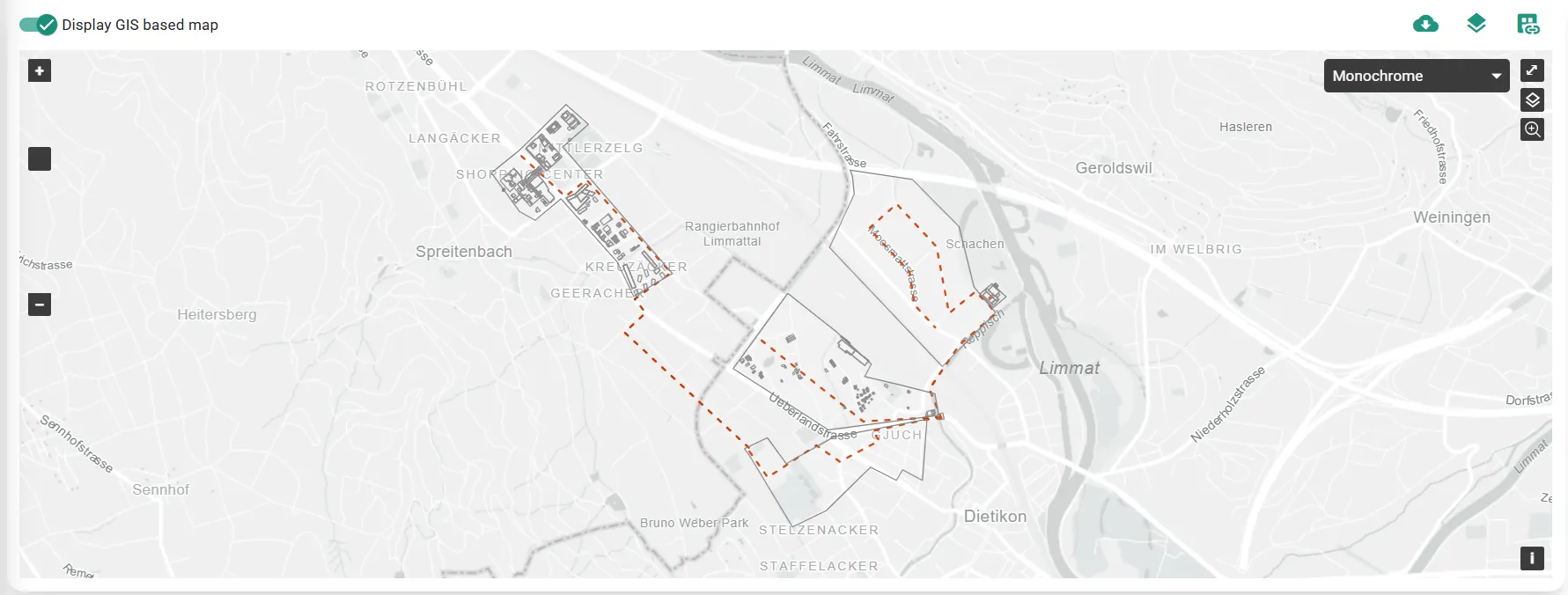
Cut grid and capacity charges with on-site flexibility
Optimise PV, storage and load flexibility against capacity charges and connection limits, so the grid request is smaller and the energy bill is lower.
- PV and storage sized against the site's true load shape
- Flexibility used to shave peak demand and capacity charges
- A smaller, more approvable grid-connection request
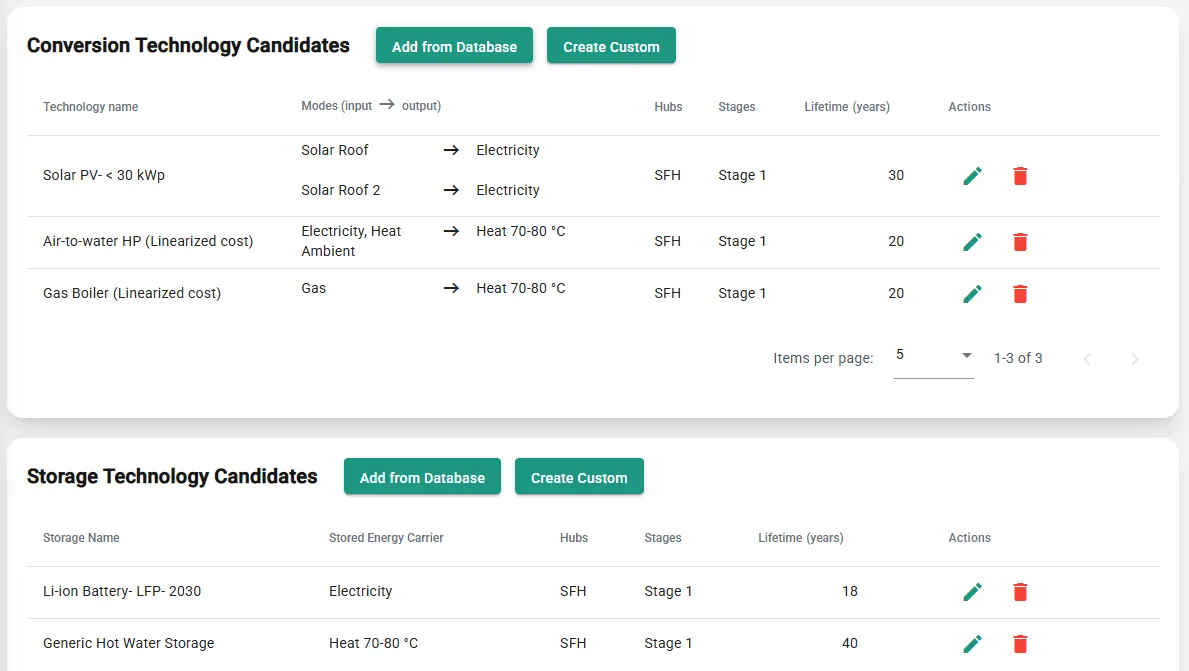
Build a defensible Scope 1, 2 and 3 pathway
Compare procurement and technology options across the full carbon scope, with each option fully costed, so the carbon claim survives scrutiny from regulators and customers.
- Scope 1, 2 and 3 emissions modelled together
- Every decarbonisation step costed, not assumed
- Outputs ready for permitting and customer due diligence
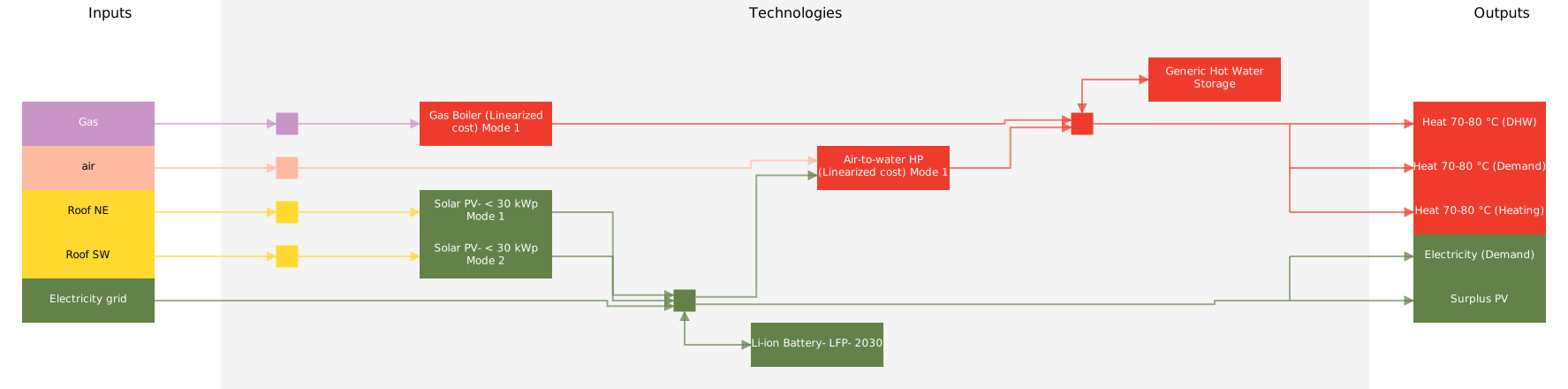
Phase the investment against load and regulation
Sequence capital spend against the load ramp and the tightening waste-heat obligations, so capital is committed when it pays and compliance arrives on time.
- Investment staged against the load build-out
- Compliance with rising waste-heat shares planned in, not retrofitted
- Scenario comparison with automated sensitivity analysis
For the economic buyer: the capex and opex of each option laid out side by side, the value of selling waste heat into a network quantified, and the grid-connection risk priced in, so the investment decision rests on the cost of each level of ambition rather than a single assumed scheme.
Sympheny models and optimises the energy system: the cooling, the on-site generation, the storage and the waste-heat-to-network business case. It is not the zoning assessment that designates a heat network zone, and it is not detailed electrical or hydraulic design. It sits upstream, deciding whether a system is the right one before any component is specified, and once the concept is set your detailed-design tools take over.
For the people who get it approved and the people who build it
The developer needs approval and economics that hold. The engineering partner needs a concept they can defend in detailed design. Sympheny serves both from the same model, which is why it works as the upstream layer in a partnership like Schneider Electric and Rapp.
Data-center developers & operators
The waste-heat revenue case, the carbon pathway and the grid-cost story that turn a contested application into a community asset.
Engineering & equipment partners
The optimised upstream concept — cooling, recovery, generation and storage — to hand into detailed design, with the rigour to defend it to the client.
Complementary, not competing
Sympheny decides the right system; EcoStruxure, ETAP and your equipment tools build it. It sits upstream, before components are specified.
UK data centre energy and waste heat, answered
What is data centre waste heat recovery?
Servers reject heat at roughly 30 to 50 °C. Waste-heat recovery captures that low-grade heat, lifts it with heat pumps to a useful temperature, and feeds it into a heat network instead of rejecting it to the air. For a data centre it turns a cooling cost into an energy product, and under heat network zoning it can become part of the case for the site. In London's Old Oak and Park Royal area a developer was selected to build the UK's first data-centre waste-heat network, expected to heat over 9,000 homes.
Why is the grid connection such a problem for UK data centres?
The constraint is rarely the technology. New load, including the large demand landing in the AI Growth Zones, meets long connection queues and constrained capacity. On-site generation, storage and demand flexibility decide how large the connection request has to be and how soon the site can run. Sympheny optimises those against capacity charges and connection limits so the request is smaller and the energy bill is lower.
Does UK heat network zoning affect data centres?
It can. Heat network zoning, under the Energy Act 2023, designates areas in England where a heat network is the lowest-cost route to low-carbon heat, and within a designated zone larger heat sources, which can include data centres, may in future be incentivised or required to supply heat to the network. Sympheny models how to meet that at the lowest whole-system cost rather than treating it as a bolt-on.
How does Sympheny work alongside Schneider EcoStruxure or ETAP?
It sits upstream of them. Equipment and electrical-design tools answer how to build and operate a chosen system. Sympheny answers whether it is the right system in the first place: which mix of cooling, heat recovery, on-site generation, storage and grid connection meets cost, CO₂ and resilience targets. Once that concept is set, the detailed-design tools take over. The two are complementary, which is why Sympheny works as the upstream layer in a partnership like Schneider Electric and Rapp.
Can Sympheny model AI and HPC load variability?
Yes. AI and high-performance-computing workloads swing sharply, which drives both cooling demand and grid capacity charges. Sympheny optimises generation, storage and load flexibility against that variability, so the system is sized for real operation, not a flat average, and capacity charges are kept down.
How much waste heat could a UK data centre supply?
It depends on the site, the network it can feed and the offtake. As market context, research suggests UK data-centre waste heat could in principle heat around 3.5 million homes, and the Old Oak network is expected to heat over 9,000. For a specific site, Sympheny quantifies the recoverable heat, the revenue from selling it and the cost and CO₂ effects together, before any commitment is made.
Waste heat needs a network to go to
Plan a UK data centre the grid and the planners will back
Bring us a site. We will model the cooling, the on-site generation, the grid-connection risk and the waste-heat-to-network case together, and show you the system worth building before anyone specifies a component.