Plan a data center the neighbourhood and the grid will approve
The hardest part of a new data center is no longer efficiency. It is approval. Sympheny turns the site into a neighbourhood energy asset — recovering server waste heat into district heating and de-risking cost, carbon and grid load with multi-energy optimisation.
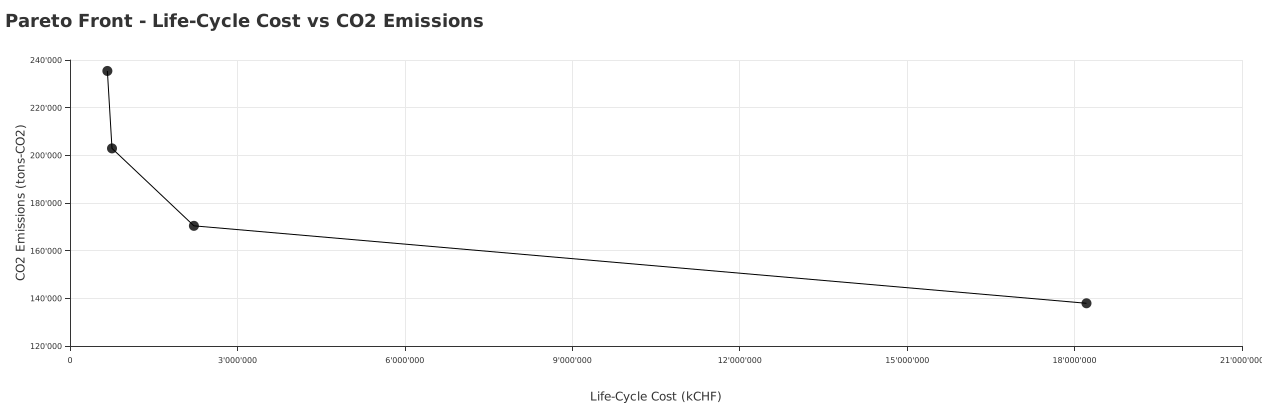
Cost-versus-carbon trade-off for a data-center energy concept, with each point a fully costed system option.
Approval, not efficiency, is what stalls data centers
Permitting has become the bottleneck
More than USD 64 billion of data-center projects are reported stalled at permitting, and Amsterdam has restricted new hyperscale development. Community and grid objections, not engineering, decide whether a site gets built.
Waste-heat reuse is now mandated
Germany's Energy Efficiency Act (EnEfG) requires new data centers to reuse a rising share of their waste heat, ramping from 10% toward 20% across 2026 to 2028. Swiss cantonal permits increasingly carry comparable conditions.
AI load makes the grid case harder
AI and HPC workloads swing fast and push up both cooling demand and grid capacity charges. A system sized for a flat average is wrong for real operation, and the connection request can collide with a constrained grid.
Recovering low-grade heat into networks is what we do
A low-temperature thermal network for 90,000 MWh of annual heating and cooling, modelled across six hubs and more than 30 price-and-demand scenarios. The same low-grade-heat-into-a-network problem a data center poses.
Read the case studyAn eco-quartier roadmap that tested whether on-site and wastewater waste heat could anchor an anergy network, reaching an 83% CO₂ cut by 2040 across three fully costed pathways.
Read the case studyA city-wide roadmap that confirmed a CO₂-free supply by 2035 at similar life-cycle cost, under a capacity-based tariff. The same grid-cost logic a data center faces at connection.
Read the case studyTurn the data center into a neighbourhood energy asset
Servers reject heat at 30 to 50 °C. Recovered with heat pumps and fed into a district heating network, that heat stops being a cooling cost and becomes an energy product the surrounding community wants, a permit lever no cooling vendor or switchgear supplier can offer. Underneath, Sympheny models electricity, cooling, heat and storage together and uses MILP optimisation to meet cost, carbon and resilience targets at once.
Size cooling and waste-heat recovery as one system
Model the cooling plant and the heat-recovery loop together rather than in isolation, so the recovery investment is justified by the heat revenue and the cooling savings it unlocks.
- Server waste heat at 30 to 50 °C lifted to network temperature with heat pumps
- Recovery sized against a real district-heating offtake profile
- Cooling capacity matched to AI and HPC load swings, not a flat average
Cut grid and capacity charges with on-site flexibility
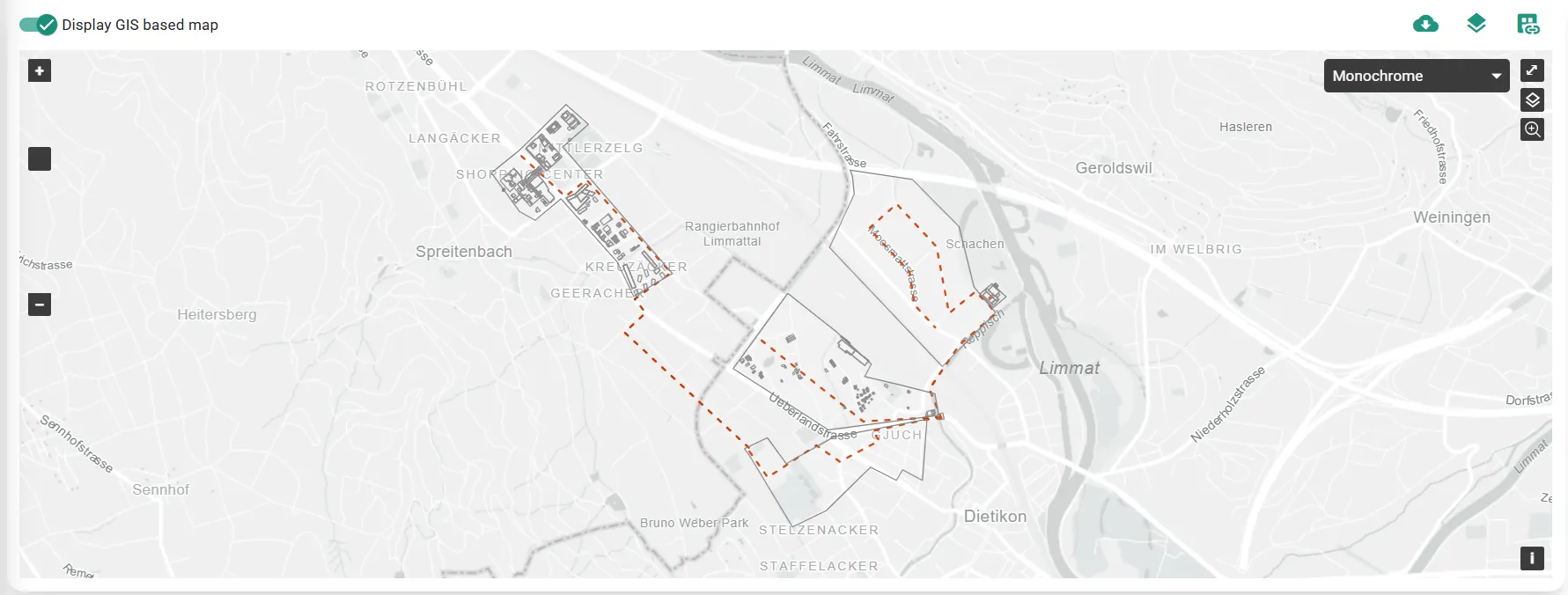
Optimise PV, storage and load flexibility against capacity charges and connection limits, so the grid request is smaller and the energy bill is lower.
- PV and storage sized against the site's true load shape
- Flexibility used to shave peak demand and capacity charges
- A smaller, more approvable grid-connection request
Build a defensible Scope 1, 2 and 3 pathway
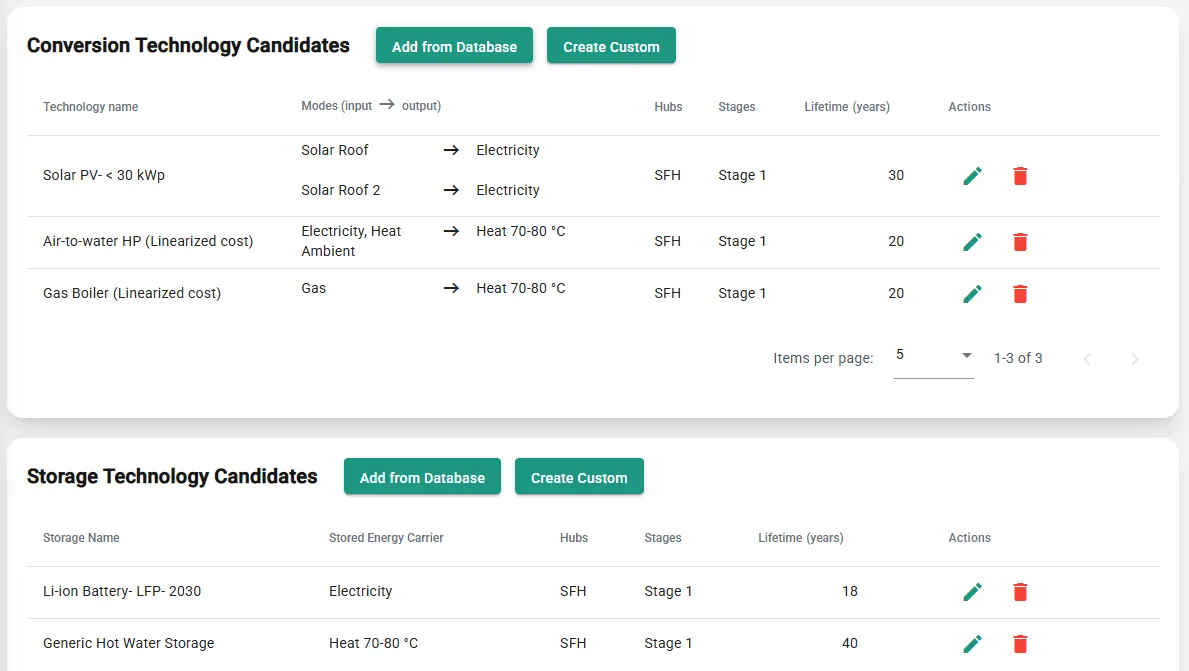
Compare procurement and technology options across the full carbon scope, with each option fully costed, so the carbon claim survives scrutiny from regulators and customers.
- Scope 1, 2 and 3 emissions modelled together
- Every decarbonisation step costed, not assumed
- Outputs ready for permitting and customer due diligence
Phase the investment against load and regulation
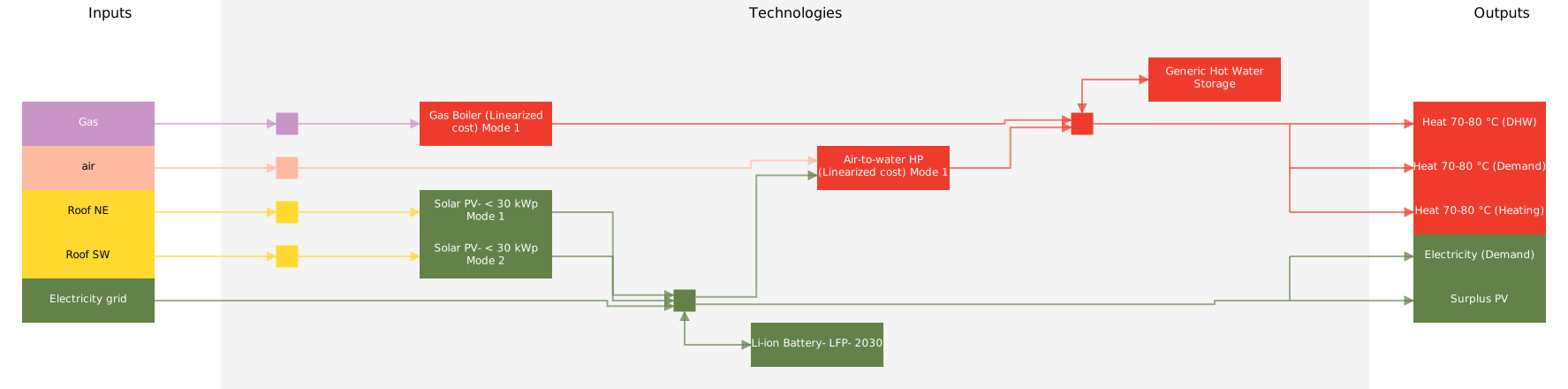
Sequence capital spend against the load ramp and the tightening waste-heat obligations, so capital is committed when it pays and compliance arrives on time.
- Investment staged against the load build-out
- Compliance with rising waste-heat shares planned in, not retrofitted
- Scenario comparison with automated sensitivity analysis
On a 5 MW data center, indicative modelling points to 15 to 25% lower energy-system cost (roughly CHF 1.0 to 1.6 million a year), a 40 to 65% CO₂ reduction, and CHF 200,000 or more a year in waste-heat revenue, at a PUE near 1.15. Indicative ranges from a reference model, not a guarantee of results.
Sympheny does not replace your electrical or equipment-design tools, and it does not compete with EcoStruxure or ETAP. It sits upstream of them, deciding whether a system is the right one before any component is specified. Once the concept is set, your detailed-design tools take over.
For the people who get it approved and the people who build it
The developer needs approval and economics that hold. The engineering partner needs a concept they can defend in detailed design. Sympheny serves both from the same model, which is why it works as the upstream layer in a partnership like Schneider Electric and Rapp.
Data-center developers & operators
The waste-heat revenue case, the carbon pathway and the grid-cost story that turn a contested application into a community asset.
Engineering & equipment partners
The optimised upstream concept — cooling, recovery, generation and storage — to hand into detailed design, with the rigour to defend it to the client.
Complementary, not competing
Sympheny decides the right system; EcoStruxure, ETAP and your equipment tools build it. It sits upstream, before components are specified.
Data center energy & waste heat, answered
What is data center waste heat recovery?
Servers reject heat at roughly 30 to 50 °C. Waste-heat recovery captures that low-grade heat, lifts it with heat pumps to a useful temperature, and feeds it into a district heating network instead of rejecting it to the air. For a data center it turns a cooling cost into an energy product and a community benefit, which can also help secure planning approval.
Why is it so hard to get a data center approved?
The constraint is rarely the technology. It is community opposition and grid capacity. Tens of billions of dollars of data-center projects are stalled in permitting, Amsterdam has restricted new hyperscale sites, and regulators in Germany and Switzerland now attach waste-heat-reuse conditions to approval. A credible plan to return heat to the neighbourhood is becoming part of the licence to build.
Does German law require data centers to reuse waste heat?
Yes. Germany's Energy Efficiency Act (EnEfG) sets minimum waste-heat-reuse shares for new data centers, rising over the 2026 to 2028 period. Switzerland increasingly attaches comparable conditions to cantonal permits. Sympheny models how to meet those obligations at the lowest whole-system cost rather than treating them as a bolt-on.
How does Sympheny work alongside Schneider EcoStruxure or ETAP?
It sits upstream of them. Equipment and electrical-design tools answer how to build and operate a chosen system. Sympheny answers whether it is the right system in the first place: which mix of cooling, heat recovery, on-site generation, storage and grid connection meets cost, carbon and resilience targets. Once that concept is set, the detailed-design tools take over. The two are complementary.
Can Sympheny model AI and HPC load variability?
Yes. AI and high-performance-computing workloads swing sharply, which drives both cooling demand and grid capacity charges. Sympheny optimises generation, storage and load flexibility against that variability so the system is sized for real operation, not a flat average, and capacity charges are kept down.
How much waste-heat revenue can a data center earn?
It depends on the site, the heat offtaker and local tariffs. As an indicative figure, a 5 MW data center selling recovered heat into a nearby network can generate on the order of CHF 200,000 per year. Sympheny quantifies the revenue and the cost and carbon effects together for a specific site before any commitment is made.
Waste heat needs a network to go to
Plan a data center your community will welcome
Bring us a site. We will model the cooling, the waste-heat revenue, the grid cost and the carbon pathway together, and show you the system worth building before anyone specifies a component.