District energy feasibility, decided before the study is written.
For a campus, a downtown district or a mixed-use development, the first question is whether a shared district energy system beats heating and cooling each building on its own. Sympheny answers it on real hourly demand: which buildings to connect, what central supply mix, and how to stage the build, so the feasibility study lands as a costed decision instead of a hunch.
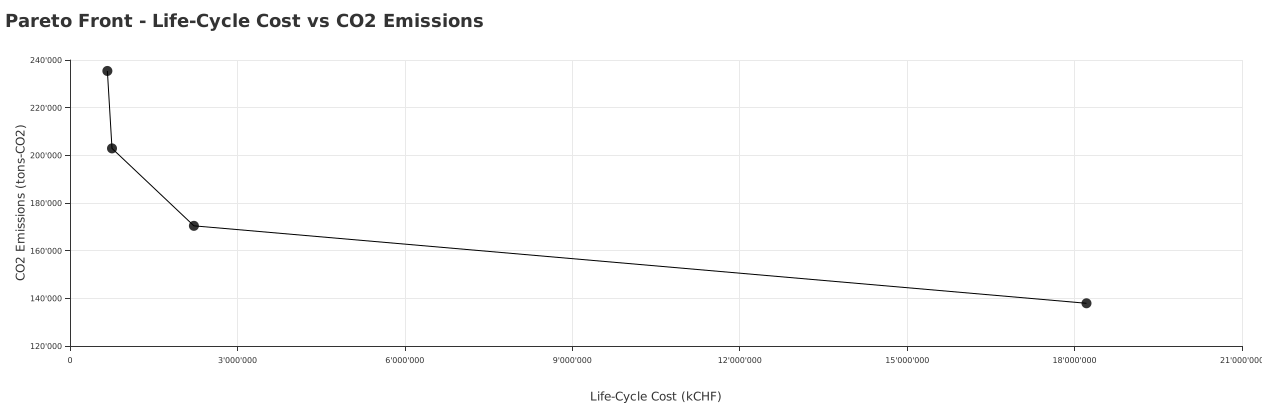
Every district-versus-building option on one chart: life-cycle cost against carbon, from a single feasibility model.
What district energy feasibility studies are up against.
Aging central plant meets a decarbonization target
A lot of campuses and districts run on a central steam or hot-water plant that is reaching end of life right as a decarbonization target lands. Replacing it like for like is the easy answer and usually the wrong one. The real question is whether a modern district energy system, or a move to building-level systems, is the better bet on cost and carbon, and that needs to be proven, not assumed.
District-versus-building gets decided too late
The choice between a shared district system and building-by-building heating and cooling is the decision that drives the whole project, yet it is often made on instinct early and only tested once buildings are already designed. By then the connection geometry and the central supply are locked in, and the chance to size the district to the buildings that actually pay for it is gone.
A feasibility study has to be defensible
A district energy feasibility study gets read by a university board, a developer's investment committee or a utility, and they want the evidence behind the recommendation, not two options in a spreadsheet. It has to compare the district system against the building-level baseline on the same cost and carbon basis, show which buildings carry the case, and survive the review where someone asks why.
Deciding district-versus-building against real demand is what we do.
A shared low-temperature district network moving 90,000 MWh a year of heating and cooling, modeled across six hubs and 30+ scenarios, the same district-versus-building question a campus feasibility study has to answer.
Read case studyA district roadmap testing whether shared on-site and wastewater heat could anchor a district network, reaching an 83% CO2 cut by 2040 across three fully costed pathways.
Read case studyA district energy supply study comparing candidate central-supply scenarios on cost and carbon, the kind of go/no-go evidence a feasibility study is built on.
Read case studyDecide district-versus-building, the supply mix and the staging in one model.
Sympheny models the buildings, the candidate network, the central supply and storage as one multi-energy system and optimizes it with mixed-integer programming. Whether a shared district energy system beats building-level systems, which buildings to connect, what supply mix to build and in what order all come out of the same run, compared on life-cycle cost against CO2 on real hourly demand, rather than stitched together from separate studies.
Model the campus or district as it actually is.
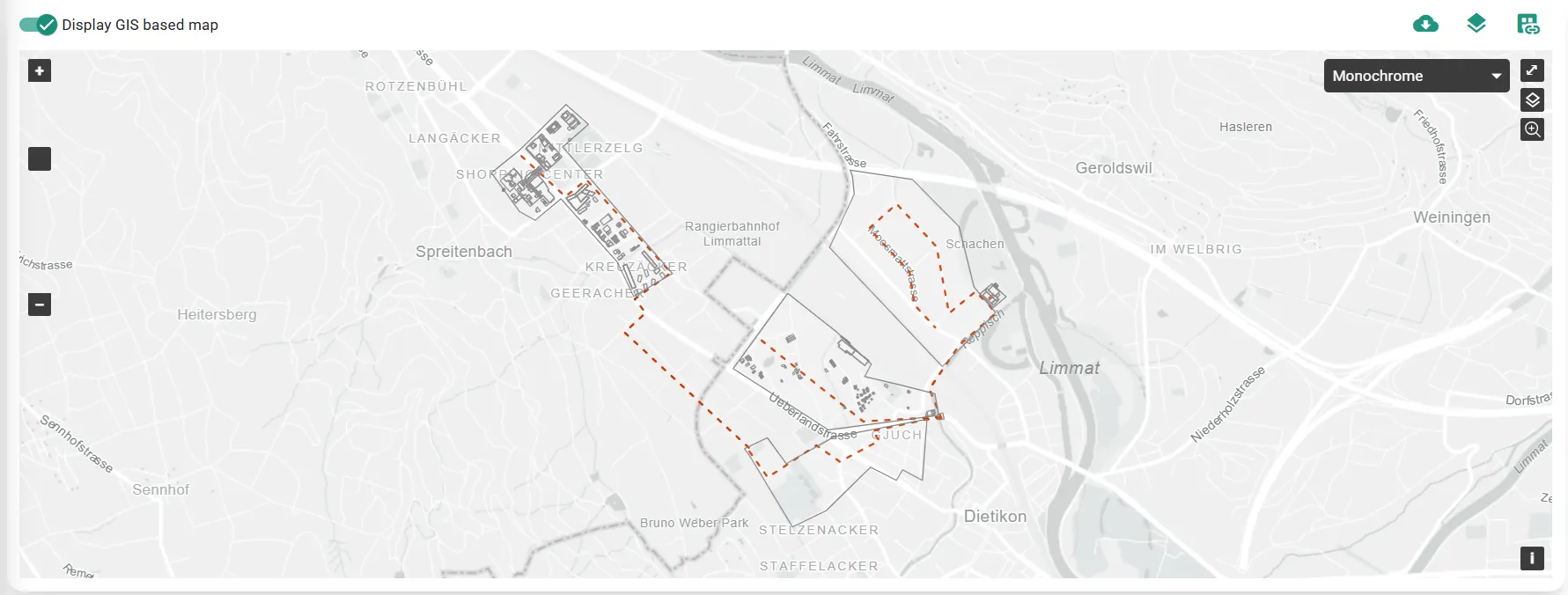
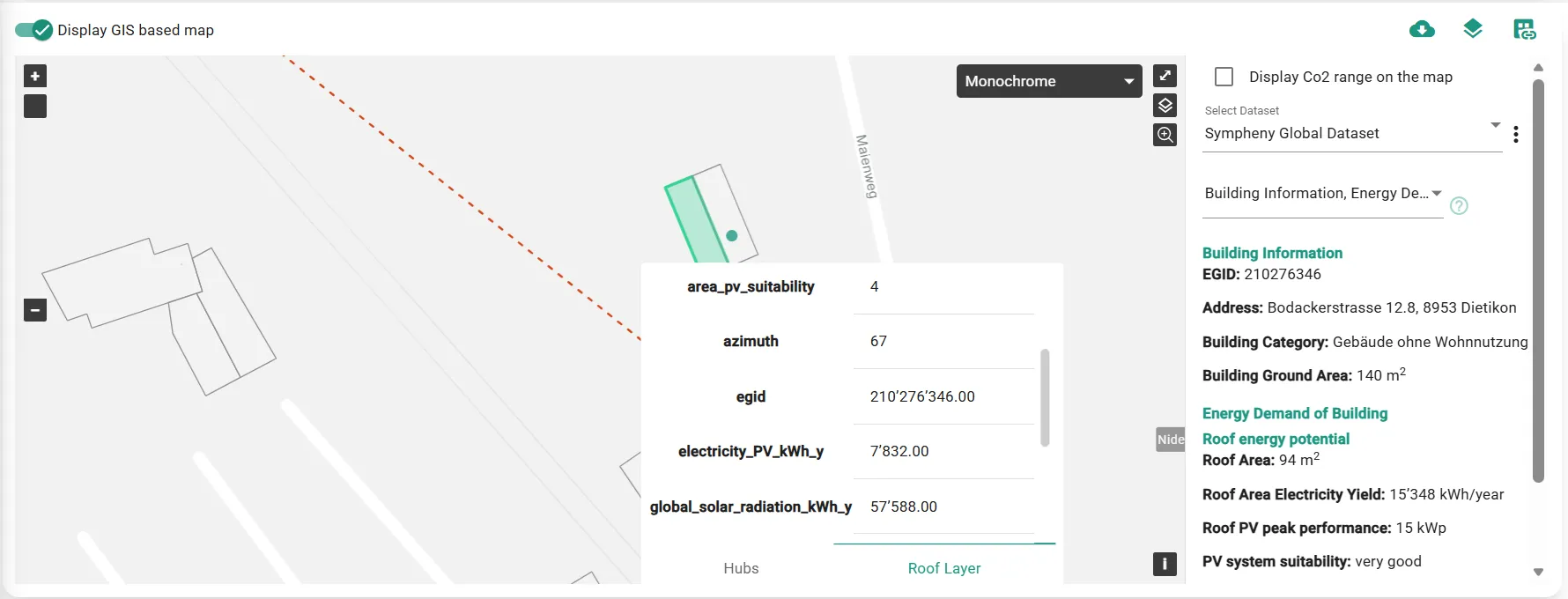
Start from the site, not a blank sheet. Sympheny's GIS-enabled view holds the buildings, their hourly heating, cooling and electricity demand and the local resources, so the analysis reflects the real thermal density and connection geometry that decide whether a district system is worth building at all.
- GIS site view with buildings, hourly loads and candidate network routes
- Thermal density and connection geometry that drive the district case
- From a single building up to a whole campus, downtown district or development
Test the shared system against the building-level baseline.
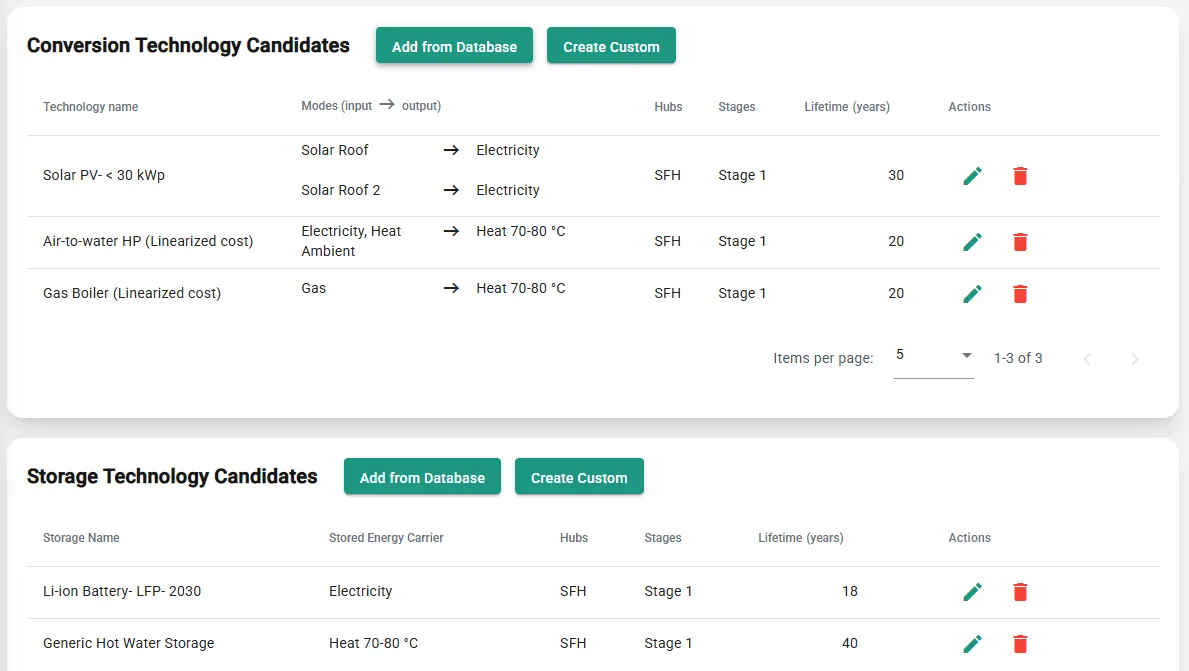
The central decision is whether a shared district energy system beats heating and cooling each building on its own. Sympheny runs both as candidate systems in the same optimization, so the district network, central supply and storage are compared like for like against decentralized building systems on cost and carbon, with the buildings that carry the case made explicit.
- Shared district system and building-level baseline compared in one model
- Central supply, storage and the network sized by the engine
- Which buildings to connect chosen on where the case actually holds
Decarbonization pathways, stress-tested.
A feasibility study gets challenged. Sympheny runs multiple pathways from cost-optimal to carbon-optimal and stress-tests each against shifting energy prices, phased development and load growth, so the recommendation holds when the assumptions move and when a board or investment committee asks why.
- Multiple pathways from cost-optimal to carbon-optimal
- Automated sensitivity analysis on the key assumptions
- Underlying data exported to Excel for the study deliverable
Stage the build and show what each level of ambition costs.
Instead of a single answer, Sympheny returns the trade-off between life-cycle cost and emissions as a Pareto front, with the build order staged. The university, developer or utility sees what the cost-optimal, the carbon-optimal and the viable middle path each cost, and which buildings get connected first, before committing capital.
- Pareto front of life-cycle cost against CO2
- Staged build-out: which buildings connect first, what follows
- Investment and capacity overviews straight from the platform
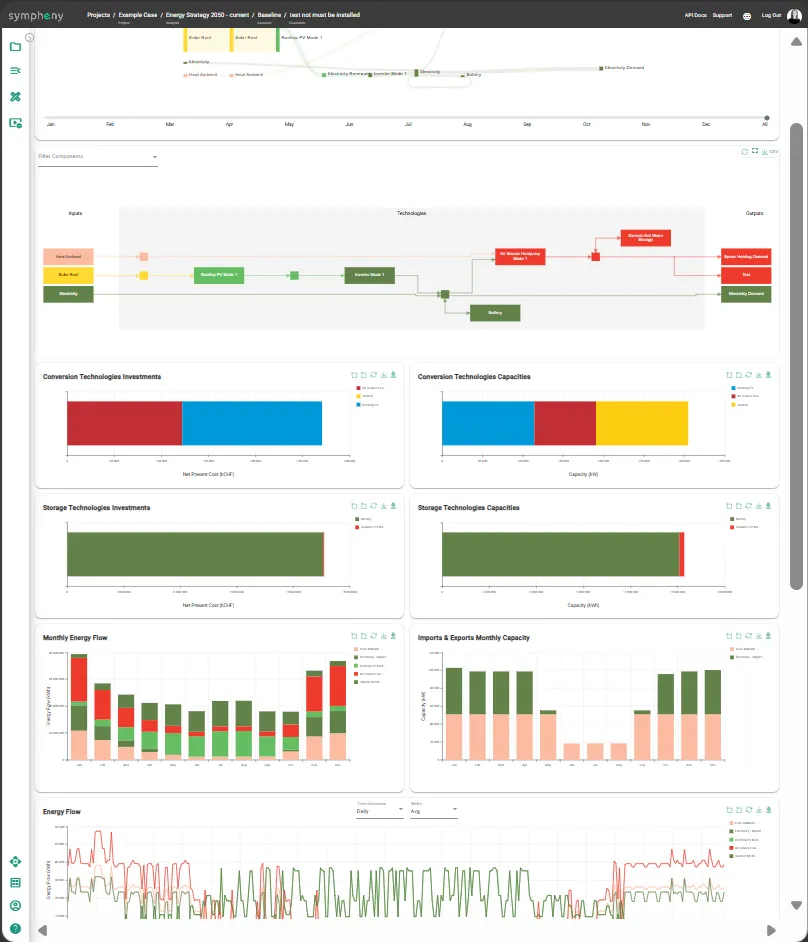
For the developer, university or utility, the feasibility study lands as a costed answer: whether the district system pencils out against the building-level baseline, what each level of decarbonization costs, and the staging that fits the budget. The figures are directional, from the project model, not a guaranteed outcome for a specific site.
Sympheny is the upstream layer of a district energy feasibility study. It decides whether a shared district system is worth building, which buildings to connect and what central supply to size, before any pipe, plant or interconnection is specified. It does not replace your detailed mechanical, hydraulic or electrical design, and it is not the formal utility interconnection request. Once the concept is settled, your A&E firm takes it into detailed design and your delivery partners build it.
Built for the district-versus-building decision a study has to defend.
Plenty of tools touch parts of district energy planning. Sympheny is built for the specific decision a feasibility study has to defend: whether a shared district system beats building-level systems, which buildings to connect, and why.
Decides district-versus-building, not just sizes a network
Most district tools assume the network and size it. Sympheny runs the shared district system and the building-level baseline as competing candidates in one optimization, so the go/no-go on a district system is a result, not an input.
Upstream of detailed design and your A&E firm
Mechanical, hydraulic and electrical design tools size pipes and plant once the concept is chosen. Sympheny sits ahead of them, settling which system is worth building so your A&E firm starts detailed design from a decision that holds.
Multi-energy, deterministic and auditable
Electricity, heating and cooling are modeled together on a deterministic MILP engine, and every result traces to its inputs. That is what lets a recommendation survive the review where a board, developer or utility asks why.
District energy feasibility, explained.
What is a district energy feasibility study?
A district energy feasibility study is the upstream analysis that decides whether a shared district energy system is worth building for a campus, downtown district or mixed-use development. It works out whether a shared network and central supply beat heating and cooling each building on its own, which buildings to connect, what supply mix to build, and how it compares on life-cycle cost and carbon. Sympheny runs that analysis as a multi-energy optimization on real hourly demand and returns a Pareto front of options with a staged build order, rather than a single recommendation.
District energy versus building-level systems: how do you decide?
You compare the two on the same cost and carbon basis, against the buildings' real hourly demand. A shared district system carries higher network capital but can share heat and cooling between buildings, run more efficient central supply and unlock cheaper decarbonization at scale; building-level systems avoid the network but lose that sharing. The answer depends on thermal density, connection geometry and the supply mix. Sympheny runs both as competing candidates in one optimization, so the decision is a costed result rather than a rule of thumb.
What does a district energy feasibility study cost, and what drives it?
The cost depends on the size of the district, how many buildings and supply options are in scope, and how much existing demand and resource data has to be assembled. The bigger driver of the project economics, though, is what the study finds: which buildings carry the case, how ambitious the decarbonization target is, and how the build is staged. Sympheny compares those on the same life-cycle cost and CO2 axes and shows the marginal cost of each increment, so the study spends its effort on the decisions that move the number. The figures are directional, from the project model, for a specific site.
How does Sympheny model district versus decentralized systems?
Both enter the same optimization as candidate systems. Sympheny holds the buildings and their hourly heating, cooling and electricity demand, then lets the engine choose between a shared district network with central supply and storage and decentralized building-level systems, sizing each and connecting only the buildings where the case holds. Because it is one multi-energy model on a deterministic MILP engine, the district-versus-decentralized comparison is like for like and every result traces back to its inputs.
How does district energy relate to a thermal energy network?
A thermal energy network is one of the systems a district energy feasibility study can land on. Where a study concludes that a shared system wins, the modern form is usually a low-temperature or ambient thermal energy network with distributed heat pumps, rather than a conventional high-temperature steam or hot-water district. The feasibility study decides whether to build a shared system at all and which buildings to connect; the thermal energy network is the technology that delivers it. Our thermal energy network pillar covers that side in depth.
Where does a district energy feasibility study fit alongside our A&E firm?
Sympheny sits upstream of detailed design. It answers whether a district energy system is the right call and which configuration to build; your A&E firm takes the chosen concept into detailed mechanical, hydraulic and electrical design. The two are complementary stages. Most of the decisions that determine whether a district system pencils out are made at the concept stage Sympheny is built for, before the A&E firm's detailed-design work begins.
Related US planning topics and proof.
Settle the district decision on numbers you can defend.
Bring a campus, district or development to a demo and watch district-versus-building, the supply mix and the staging resolved in one model, or start a free trial and build the first feasibility concept yourself.