Plan the clean power behind your data center before you sign the PPA.
Powering a data center with renewables is a sourcing decision and a sizing decision at once: how much to cover with a physical or virtual PPA, what an on-site solar and storage system is worth building, and how close you can get to 24/7 carbon-free supply. Sympheny puts those choices in one model and prices each one on cost and carbon, so the sustainability lead and the economic buyer are looking at the same numbers.
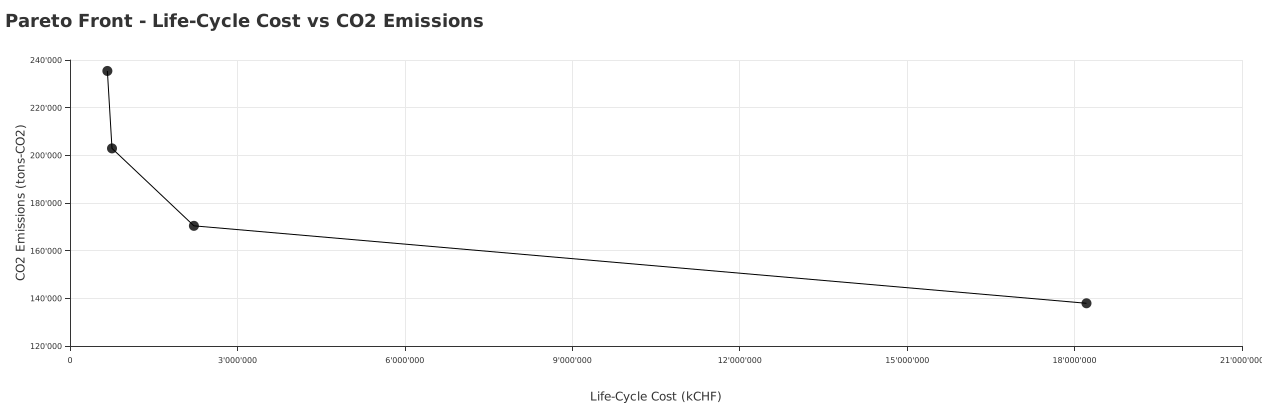
Every clean-power option for a data center on one chart: life-cycle cost against carbon, from a single model.
What data center energy and sustainability teams are weighing.
Annual matching no longer satisfies anyone
Buying enough renewable energy certificates to cover annual consumption used to count as 100% renewable. Now operators, customers and a growing set of internal targets want hourly, 24/7 carbon-free supply, and a flat annual PPA leaves a lot of grid hours uncovered. Closing that gap is a sizing question, not a procurement formality.
PPA, on-site, or both is hard to settle
A physical PPA, a virtual PPA and an on-site solar and storage system all reduce the same Scope 2 footprint differently and at different cost and risk. Teams end up comparing them in separate spreadsheets, so the question of how much to source off-site versus build behind the meter rarely gets a costed answer.
Scope 2 accounting cuts two ways
The same megawatt-hour looks different under market-based and location-based Scope 2 accounting, and a strategy that looks clean on one basis can look ordinary on the other. Without modeling both, it is easy to over-claim, or to buy contracts that move the market-based number without changing the physical grid mix.
Sizing on-site solar and storage against a real load is what we do.
Sixteen on-site generation and energy-sharing scenarios compared in one project, where generating and sharing power locally was the lowest-risk strategy. The same behind-the-meter sizing a data center solar and storage build relies on.
Read case studyOn-site generation, storage and electricity sharing sized across a commercial site against its real load, the same hybrid solar-plus-storage problem a data center solves to lift its share of carbon-free hours.
Read case studyMulti-energy concept work delivered with a global engineering firm, on-site supply and grid options compared on cost and carbon in one model. The same optimization a data center renewable strategy is built on.
Read case studySize the on-site system and the PPA together, and price each toward 24/7.
Sympheny models the data center load, on-site solar, storage and the grid as one system and optimizes it with mixed-integer programming. It sizes a behind-the-meter solar and storage system against the real hourly load, layers a physical or virtual PPA on top, and reports how far each combination gets toward hourly carbon-free supply, with the cost and the Scope 2 effect of every option on the same axes.
Model the data center load and what the site can host.
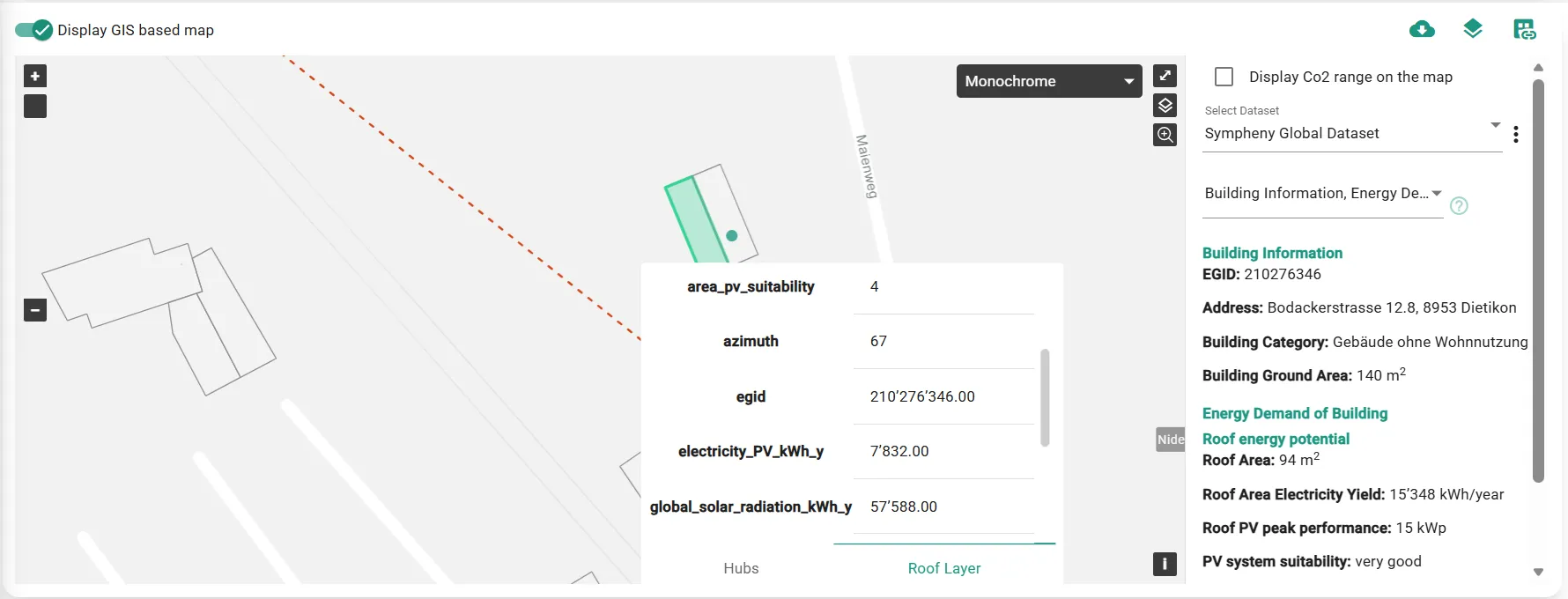
Start from the actual hourly load and the site, not an annual total. Sympheny holds the data center demand profile, the roof and land available for solar, and the grid connection, so the renewable strategy reflects the real shape of consumption and what the site can physically host, rather than a round number of megawatt-hours.
- Hourly load profile, not an annualized average
- On-site solar potential from the roof and land you actually have
- Grid import and export limits carried as constraints
Size hybrid on-site solar plus storage against the load.
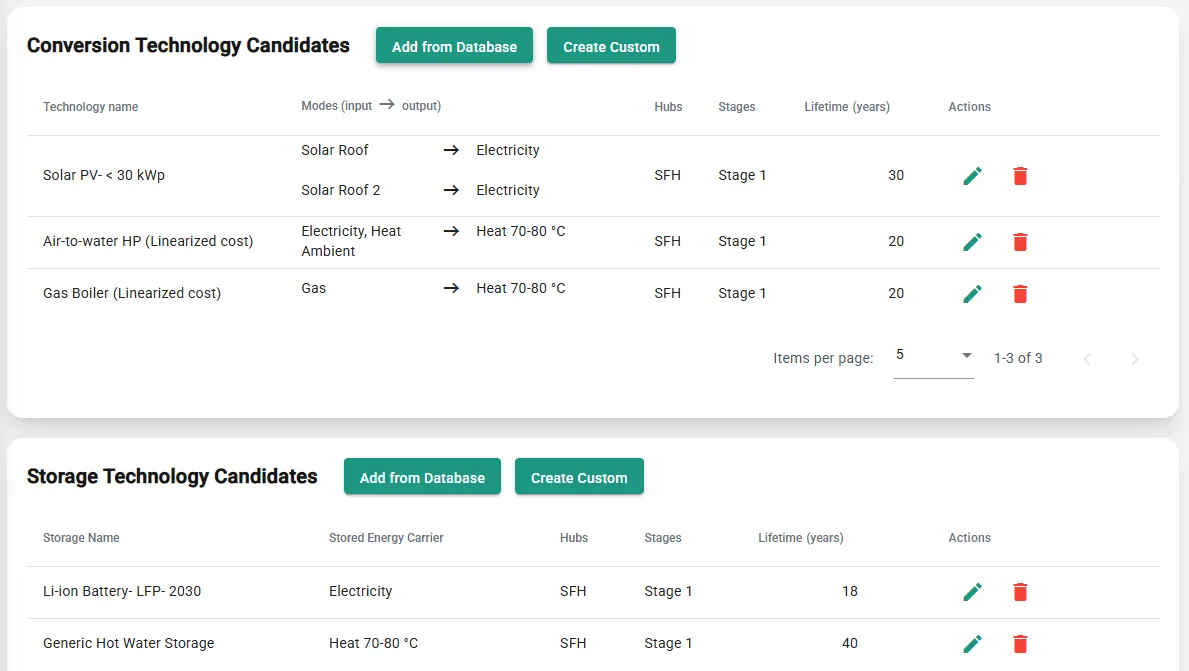
Model on-site solar and battery storage together and size them against the hourly load, so the system is justified by the carbon-free hours it actually delivers and the grid energy it displaces. Storage is sized to shift solar into the hours the load needs it, which is what moves a project from annual coverage toward hourly matching.
- Solar and storage co-sized against the real load shape
- Storage dispatched to lift the share of carbon-free hours
- Self-supply weighed against grid import on cost and carbon
Price each step toward 24/7 carbon-free supply.
How close to round-the-clock carbon-free you want to get is an input, not a guess. Sympheny compares sourcing strategies, on-site build, physical PPA, virtual PPA and the mix, on the same cost and carbon axes, so you can see what moving from annual matching toward 24/7 hourly matching actually costs before you commit to a contract.
- Annual matching versus hourly 24/7 matching, both costed
- Physical PPA, virtual PPA and on-site build compared like for like
- The marginal cost of each additional carbon-free hour made explicit
Show the Scope 2 effect and stage the build.
Sympheny reports the carbon effect of each strategy and can hold both market-based and location-based reference factors, so the team sees how a PPA or on-site build moves the number on each basis rather than only the one that flatters it. Capital is staged against the budget, and every result traces to its inputs on a deterministic MILP engine, so the plan survives the review where a developer, board or lender asks why.
- Carbon effect reported against market-based and location-based factors
- Additionality of new on-site and contracted supply made visible
- Investment staged against budget and load growth, fully auditable
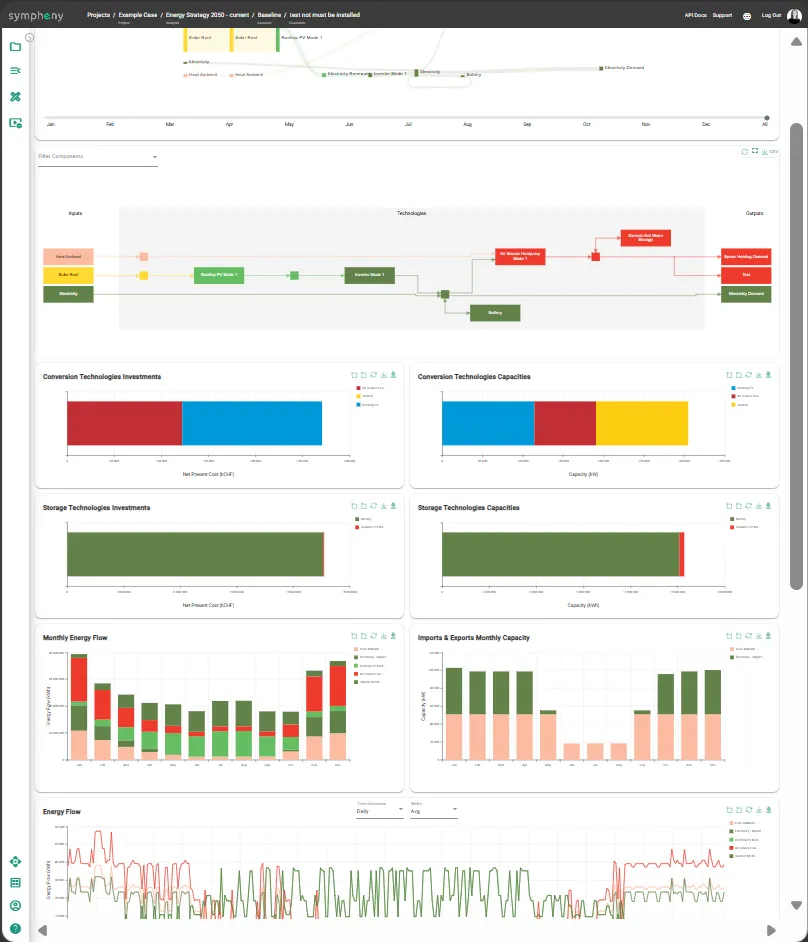
For the developer or operator, the output is a costed sourcing plan: what each level of carbon-free matching costs, the lowest-cost mix of on-site build and contracted supply that hits the target, and the staging that fits the budget. The figures are directional, from the project model, not a guaranteed outcome for a specific site.
Sympheny does not negotiate or execute your PPA, and it is not a 24/7 carbon-free tracking or settlement platform. It sits upstream of them, deciding how much on-site solar and storage is worth building and how much supply to contract, and which combination reaches your carbon-free target at the lowest total cost. Once the concept is fixed, your procurement team, energy advisor and developers take the chosen strategy into contracting and detailed design.
Clean-power planning that sizes the system, not just the contract.
Covering a data center with renewables is more than buying certificates. Sympheny weighs on-site build, storage and contracted supply together against the hourly load and the budget, which is what turns a renewable claim into a costed, defensible plan.
Hourly, not annual
The model works on the real hourly load and solar profile, so it can tell the difference between covering annual consumption on paper and actually raising the share of carbon-free hours. That is the gap 24/7 carbon-free goals are about.
Upstream of procurement and design
Sympheny settles how much to build and how much to contract, and which mix reaches the target at the lowest cost. PPA negotiation, settlement and detailed engineering sit with your procurement team and developers. It is the concept-stage layer, not a substitute for them.
Multi-energy, not single-vector
On-site solar, storage and the grid are modeled together with the rest of the site's energy system, so a strategy is judged on the whole picture rather than on the electricity contract alone, and the cheapest mix shows up in the result.
Clean-power planning for data centers, explained.
What is data center renewable energy planning?
It is the upstream analysis that decides how a data center will be powered by renewables: how much to cover with a physical or virtual PPA, whether to build on-site solar and storage, and how close the result gets to 24/7 carbon-free supply. Sympheny runs that analysis as a multi-energy optimization against the real hourly load and returns the cost and Scope 2 effect of each option on the same axes, so the sourcing decision is a costed trade-off rather than an annual certificate count.
What is the difference between a physical PPA, a virtual PPA and a sleeved PPA?
A physical PPA delivers actual electricity from a specific renewable project to the buyer, usually through the grid or a direct connection. A virtual PPA (also called a financial or synthetic PPA) is a financial contract settled against a market price with no physical delivery; the buyer keeps the renewable certificates and reports the renewable claim while continuing to draw grid power. A sleeved PPA sits in between: a utility or retailer acts as an intermediary that physically delivers the contracted renewable energy to the buyer's meter for a fee. Sympheny does not contract any of these, but it sizes how much contracted supply a given strategy needs alongside on-site build, so the procurement team negotiates against a number.
What is 24/7 carbon-free energy, and what is hourly matching?
24/7 carbon-free energy (CFE) means matching a site's electricity consumption with carbon-free supply in every hour of every day, rather than only on an annual net basis. Hourly matching is the measure behind it: instead of buying enough renewable energy over a year to cover annual consumption, you track each hour and aim to have carbon-free supply available when the load is actually drawing. Reaching high hourly matching usually needs storage and a mix of sources, because solar alone does not cover the night. Sympheny models the load and supply hourly, so it can price how far a given strategy gets toward 24/7 and what each additional carbon-free hour costs.
How does Sympheny model hybrid on-site solar plus storage feasibility?
Sympheny holds the data center's hourly load, the on-site solar potential from the roof and land available, and the grid connection, then sizes solar and battery storage together with mixed-integer optimization. Storage is dispatched to shift solar into the hours the load needs it, which is what raises the share of carbon-free hours beyond what solar alone delivers. The result compares self-supply against grid import and contracted supply on cost and carbon, so the on-site build is justified by the carbon-free hours and the grid energy it actually displaces.
How does Sympheny handle Scope 2 market-based versus location-based accounting?
Scope 2 emissions can be reported on a market-based basis, which reflects the contracts and certificates a buyer holds, or a location-based basis, which reflects the average grid mix where the load sits. The same strategy can look very different on the two bases, and a contract that improves the market-based number does not always change the physical grid mix. Sympheny can carry both reference factors so the team sees the carbon effect of an on-site build or a PPA on each basis, which also surfaces additionality: whether the supply is genuinely new rather than reshuffled.
How does Sympheny fit alongside our procurement team?
It sits upstream of them. Your procurement team and energy advisor negotiate and execute the PPA and run any 24/7 tracking and settlement once the strategy is chosen. Sympheny answers the earlier question: how much on-site solar and storage to build, how much supply to contract, and which mix reaches the carbon-free target at the lowest total cost. Once that concept is fixed, the procurement and contracting work takes over. The two are complementary stages.
Related US planning topics and proof.
Plan clean power you can actually price.
Bring us a data center load. We will size the on-site solar and storage, weigh it against a PPA, and show you what each step toward 24/7 carbon-free supply costs, before anyone signs a contract.