Cost the decarbonisation path before you commit to it.
Process heat, on-site generation, hydrogen, storage and sector coupling all interact, and the cheap path and the clean path are rarely the same. Sympheny sizes them together against a fossil baseline, so the route to lower carbon is costed and defensible before any capital moves.
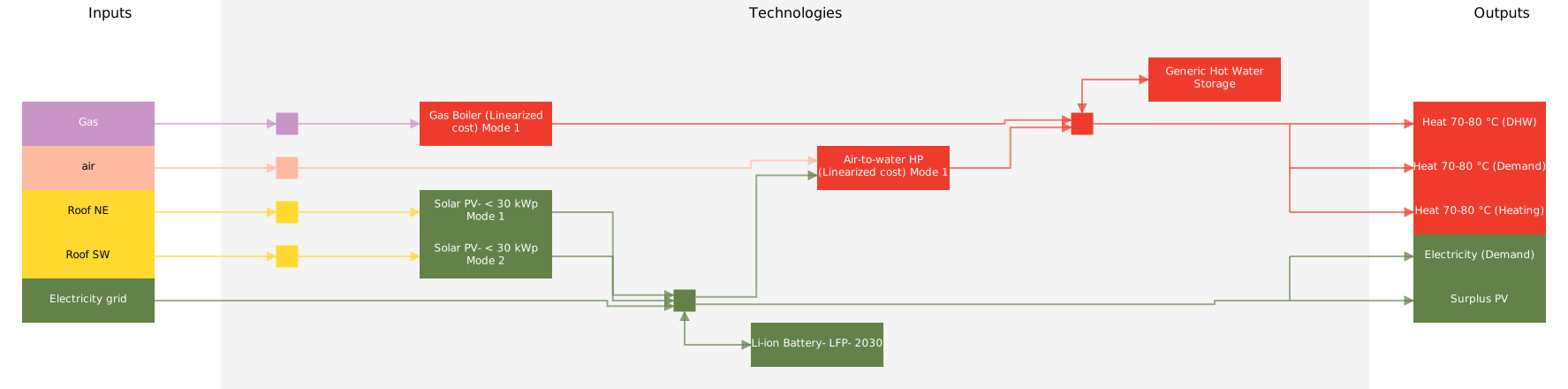
An industrial site's vectors, electricity, heat, hydrogen, process demand, modelled and optimised as one system.
Why industrial decarbonisation is hard to cost.
Sector coupling is where the value and the complexity sit
Electrify a process, add on-site PV, recover waste heat, bring in hydrogen: each option changes the economics of the others. The most attractive path almost always couples vectors, and that interaction is exactly what variant-by-variant comparison cannot capture.
Hydrogen and storage are easy to size wrong
Electrolysers, fuel cells and storage are capital-heavy and only pay under the right operating pattern. Size them against an annual average rather than real hourly generation and demand, and the business case is either too optimistic or never built.
The board wants a number against the baseline
Decarbonisation investment competes for capital. Leadership needs the CO₂ reduction, the life-cycle cost against the fossil reference and the payback: evidence a spreadsheet of separate calculations struggles to defend.
Proven on real industrial sites.
A coupled industrial-and-residential green-hydrogen study: 60% lower CO₂ at up to 26% lower life-cycle cost, with on-site hydrogen produced at a cost comparable to today's diesel.
Read case studyA port logistics site modelled across 16 variants, where on-site generation, energy-sharing and storage cut energy cost 20–25% against the status quo.
Read case studyEvery vector and technology, co-optimised against the baseline.
Process and building demand, on-site generation, hydrogen, storage and the networks between sites all enter one mixed-integer optimisation at hourly resolution. A fossil benchmark anchors the comparison, so every option is measured against the same reference on cost and carbon.
Electricity, heat, hydrogen and process, in one system.
Model the industrial loads alongside on-site generation, storage and any coupled site, a neighbouring residential area, a shared thermal network, so waste heat and surplus power are put to use rather than lost. The optimiser exploits the coupling instead of treating each vector alone.
- Process heat, electricity, hydrogen and mobility fuels modelled together
- Waste heat from electrolysers and fuel cells reused across the site
- Coupled sites linked by a shared thermal or electrical network
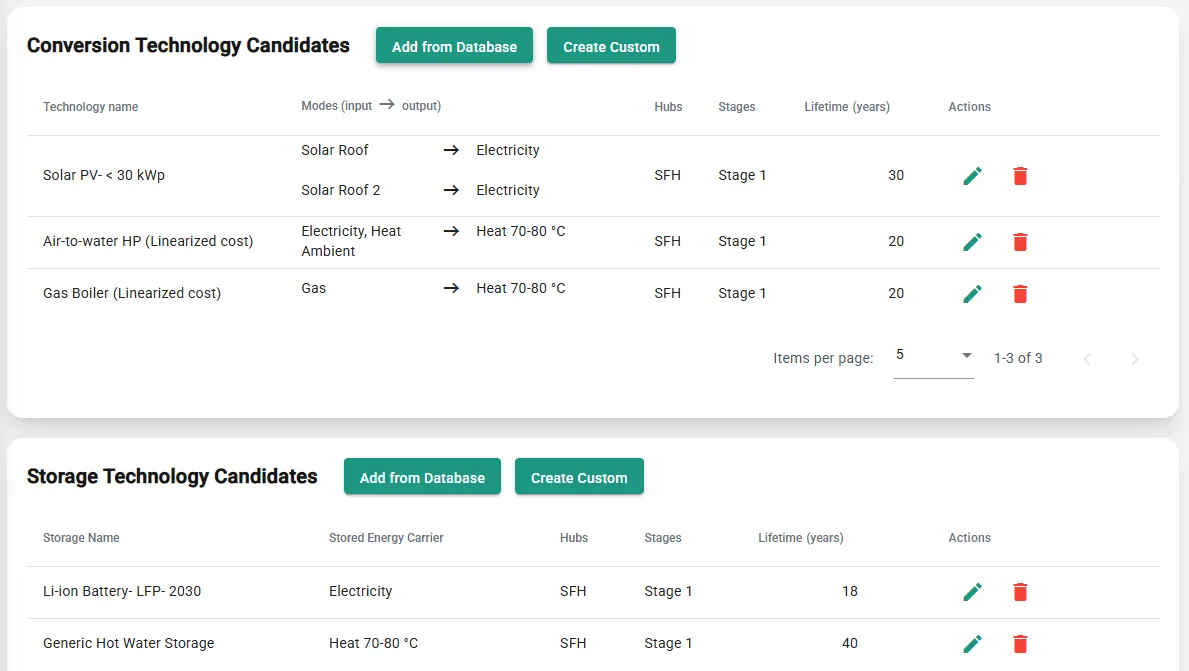
Electrolysers, fuel cells and storage, sized on real profiles.
Hydrogen production, storage and end-uses are sized against hourly on-site generation and demand, not annual averages. The engine finds the configuration where the capital actually pays, including how much of a diesel or gas load it is worth displacing.
- Electrolyser, fuel cell, H₂ and methane storage sized at hourly resolution
- Mobility and process fuel demand met from on-site production where it pays
- Capital-heavy assets sized on real operating patterns, not averages
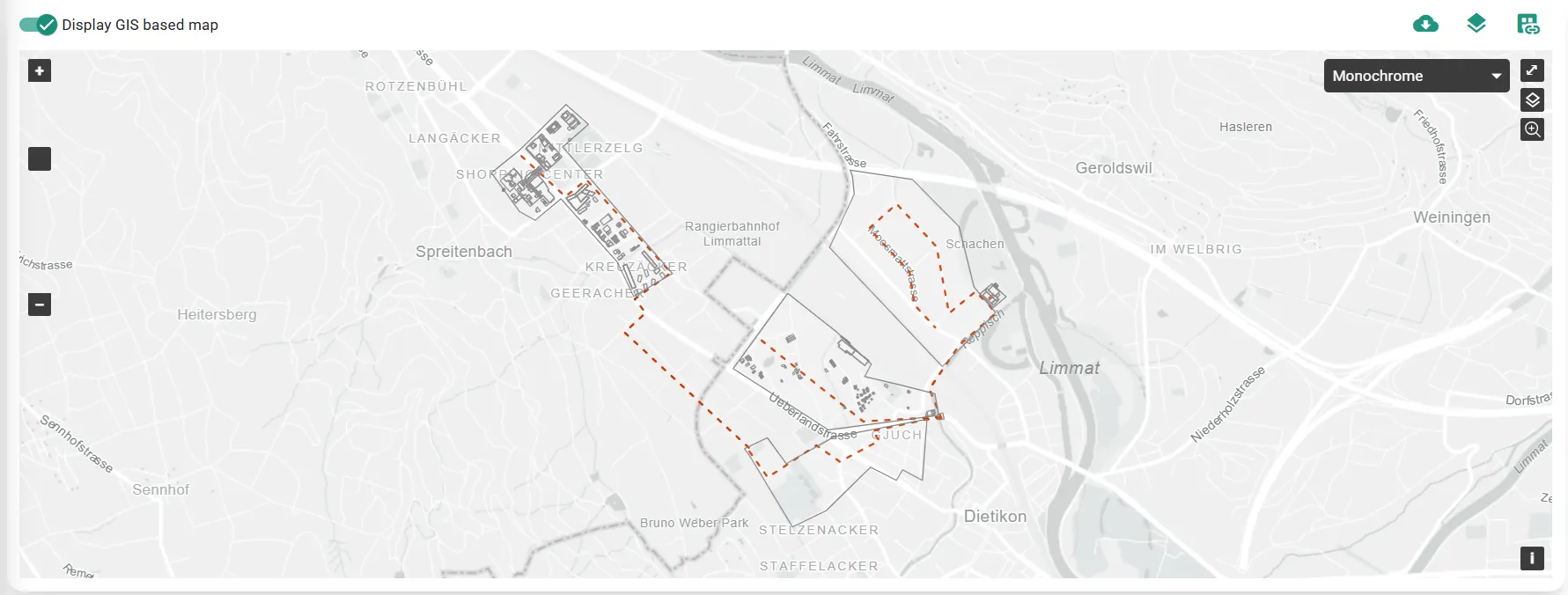
Measured against the fossil baseline, stress-tested.
Configure a fossil benchmark: diesel, oil boilers, grid power. The optimiser returns several Pareto-optimal designs against it in minutes. Test the recommended path against energy-price and demand futures so the case holds when costs move.
- Fossil benchmark anchors every cost and CO₂ comparison
- Several Pareto-optimal designs returned, not a single point
- Sensitivity across price and demand scenarios in the same model
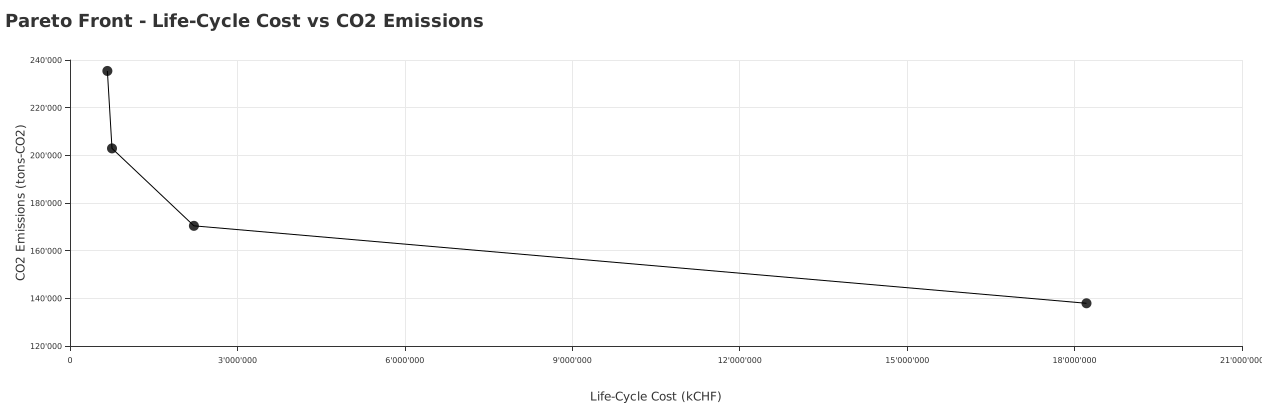
For the economic buyer, that means a defensible decarbonisation case: the CO₂ reduction, the life-cycle cost against the fossil baseline and the most economically attractive configuration, all from one model.
Sympheny covers feasibility and concept design: settling the technology mix, the sector coupling and the business case for an industrial site. Detailed process and plant engineering is a separate step in tools built for it. Most of what decides whether a decarbonisation investment proceeds is settled at the concept stage.
Built for the sector-coupled industrial decision.
Plenty of tools size one technology. Sympheny is built for the question an industrial site has to answer: which coupled system decarbonises the site, at what cost against the baseline.
Not a single-technology calculator
Electrolyser or PV sizing tools answer one asset well. Sympheny co-optimises the coupled system, generation, hydrogen, storage, process, so the comparison is consistent.
Not a long-run market model
Market and dispatch platforms model national systems over decades. Sympheny works at the site scale a decarbonisation project is actually planned at, with the technologies as explicit decisions.
Built around the optimisation, run in the browser
A MILP engine sits at the core, run in a cloud platform an engineer uses directly, returning Pareto-optimal designs in minutes with exportable data.
Questions industrial teams ask.
What is industrial site decarbonisation?
Industrial site decarbonisation is the process of cutting a site's emissions by changing how it produces and uses energy: electrifying process heat, adding on-site renewables, recovering waste heat, and sometimes producing hydrogen. Because these options interact, Sympheny models them together against a fossil baseline to find the configuration that cuts carbon at the lowest life-cycle cost.
Is green hydrogen viable on our site?
Viability depends on on-site generation, demand profiles and how much fossil fuel the hydrogen displaces, so it has to be modelled, not assumed. Sympheny sizes the electrolyser, storage and end-uses against hourly profiles and compares the result to a fossil benchmark. In the WSP study, replacing 60–70% of diesel with green hydrogen from on-site PV was the most economically attractive configuration, at a production cost comparable to diesel.
How do you compare decarbonisation options for an industrial site?
The reliable way is to optimise the whole system against a common baseline rather than cost options one at a time, because sector coupling changes the economics of each choice. Sympheny evaluates generation, storage, hydrogen and process demand together at hourly resolution and returns several Pareto-optimal designs against the fossil reference, each with its cost and CO₂.
How does Sympheny help decarbonise an industrial site?
Sympheny is a cloud-based multi-energy optimisation platform. It builds a digital twin of the site's energy system, sizes coupled technologies including hydrogen and storage, and returns Pareto-optimal designs against a fossil baseline with exportable data. Engineering teams use it to turn a feasibility question into a defensible, costed decarbonisation case in days.
Related pages and proof.
See your decarbonisation path costed.
Bring the site to a demo and watch the coupled system optimised against the baseline, or start a free trial and build the first concept yourself.