

Sympheny × Future City Alliance
Heating, cooling, solar and the grid all affect each other, but they're often planned separately. As a member of the Future City Alliance, we help cities and municipalities compare the options together, so the plan they take to council is one they can defend.
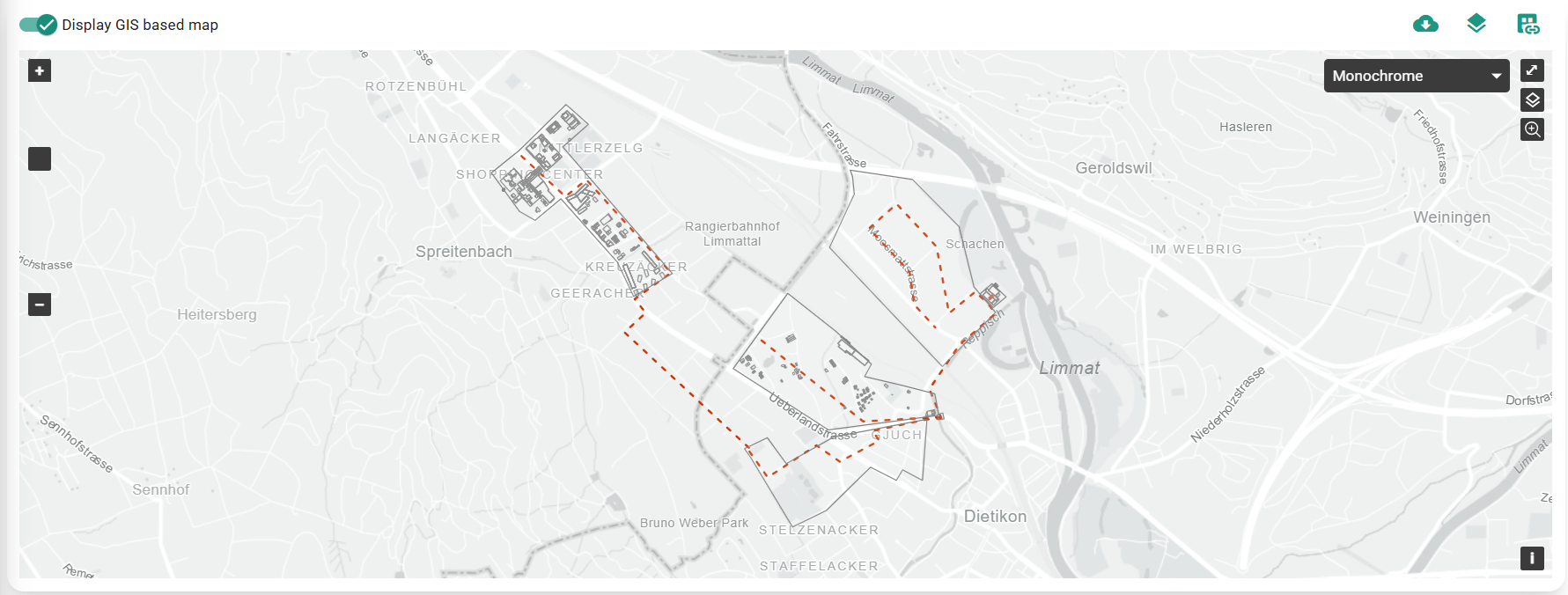
A district modelled in Sympheny: buildings and energy sources on one map.
Energy planning for Swiss cities
What the Future City Alliance does, and where Sympheny fits in, with the Chur city-wide study as the example.
The Swiss association for sustainable cities and regions
The Future City Alliance started when the two Swiss smart-city associations, SmartCity Alliance and CityZen, merged. It brings public and private organisations together so that Swiss cities and regions can develop sustainably, and it acts as a central point of contact for them.
Its members include municipalities, utilities, companies and universities of applied sciences. Together they run real-world labs, pilots and knowledge transfer across the country.
Visit futurecityalliance.com
We believe in what the Alliance is doing
Same goal
The Future City Alliance wants cities to make good long-term decisions on energy, resources and quality of life. Energy system planning is where many of those decisions get locked in for decades.
More than two or three variants
Most municipal energy plans still compare a few options by hand. Sympheny checks hundreds and shows the trade-off between cost and CO₂, so the choice is made on evidence.
Planning is a team effort
Utilities, engineering firms, GIS teams and the administration all have a part in a good plan. The Alliance already brings these people together.
A member, a partner, and a planning engine for the network
Member of the Alliance
Sympheny takes part in the Future City Alliance's network, events and workshops with cities, municipalities and other members.
Sharing what works
We bring public case studies and planning methods to the network. One example is how Chur's utility IBC modelled the whole city's energy system to 2050.
The Chur case studyBuilt on the same GIS that cities use
Esri Schweiz's managing director chairs the Future City Alliance, and Esri is also a Sympheny partner. Sympheny works with ArcGIS layers and basemaps, so a city's own GIS and building data can go straight into the energy model.
See the Esri integrationOpen to member cities
If a member city or municipality has an energy-planning question, we're happy to look at it together, from a first scoping to a full study.
Get in touchLocal electricity communities (LEG)
Since 2026, neighbours in Switzerland can share locally produced solar power through a local electricity community (LEG). Whether a LEG pays off depends on how it's set up: who joins, how big it is, and how much PV and storage it has.
With the Future City Alliance, we're developing a concept that helps municipalities answer this across a whole commune.
What a commune can compare
- No LEG, several small LEGs, or one LEG for the whole commune
- Who joins, and how much PV and storage the community needs
- Whether the LEG is bankable, and how much solar power stays local
- What it means for the local grid
A CO₂-free supply by 2035 is possible
IBC, the city utility of Chur, used Sympheny to model the whole city's energy system out to 2050. The result: a CO₂-free supply by 2035 is possible, at life-cycle costs similar to the fossil system it replaces.
Read the case studyWhere to find us
We share the Future City Alliance stand at both events. Come by and see how a city's GIS data becomes an energy plan.
Swiss Smart City & Citizen Day 2026
The national Smart City Day, now centred on citizens.
On the Future City Alliance stand.
ProgrammeEsri Konferenz 2026
Esri Schweiz's community event for ArcGIS users.
On the Future City Alliance stand.
Event infoPlanning your city's energy future?
Talk to us about your municipality, utility or district. We'll show you what Sympheny can compare for you.