

Standard heating and cooling kits. Sized for your site.
Heatnet Global bundles proven components, suppliers and skills into modular kits for common heating and cooling applications, from a single building to a whole district. Sympheny sizes and optimises each kit for the site in front of you. Every project starts from a proven kit and ends with a concept that fits.

A district modelled in Sympheny: buildings and energy sources on one map.
How a kit becomes a project
The kit brings the parts. Sympheny sizes them. Heatnet Global's network delivers the project.
Heat-network figures: Aalborg University, REPower District Heating (2023).
From tailor-made to industrialised, without one size fits all
Heating and cooling systems are still mostly designed one custom project at a time. That is slow and expensive, and it prices smaller communities out. Standard kits cut capex and risk and speed up delivery. But no two sites have the same demand, sources or buildings. A kit only pays off when it is sized for the site it lands on. That is the part Sympheny does.
The kit brings the parts
Heatnet Global bundles proven technologies, suppliers and best practice into a standard package for a common application. No one starts from a blank page.
Sympheny sizes them
Sympheny optimises the kit for the actual site: which units, how large, how much storage, which buildings first, and in what sequence. Every option is compared on cost and CO₂.
The network delivers the project
Heatnet Global's partner network brings the consultants, installers and operators who take the concept from model to installed plant.
What Sympheny answers for each kit
Sympheny works on four Heatnet kits, each for a common heating or cooling application. These are the questions the Sympheny model settles before anything is ordered.
Small Scale Heat Networks
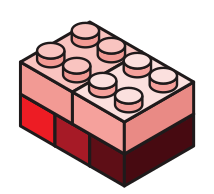
Affordable, replicable heat networks for towns, villages and rural areas, where the heat demand is too small for a custom study budget but a wrong design is still expensive.
In the kit: The kit built in the video above.
- Which supply mix fits: heat pumps, biomass, solar thermal, local waste heat?
- One central plant or a few smaller ones?
- How large should the thermal storage be?
- Which buildings to connect first, and how the network grows from there
- What heat price the network can offer, and still pay back
Quick Fix Kit for Cooling Buildings
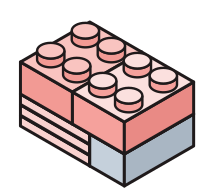
A limited budget and many buildings: which ones to fix first, and how to get the most out of every franc, euro or pound before the next heatwave. Built for schools, care homes and social housing.
In the kit: Insulation and shading plates with a cooling block.
- With a fixed budget and 200 homes, which buildings come first?
- Which measures give the most comfort for the money: insulation, shading or active cooling?
- Which mix keeps indoor temperatures in a safe range at least cost?
- What can be done before next summer, and what has to wait
- How cooling and heating can share the same plant later on
Recovering Industrial Waste Heat
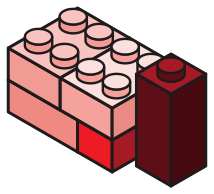
Cost-effective energy recovery for small-scale industries and incineration plants. Heat that goes up the stack today becomes process heat, electricity or cooling, with or without a heat network nearby.
In the kit: Heat exchanger, heat pump and the storage column.
- How much of the waste heat is usable, and at which hours?
- What to do with it: process heat on site, electricity through an ORC, cooling through an absorption chiller, or a heat network where there is one?
- How much thermal storage keeps the ORC or chiller running when the process stops?
- Do solar thermal, PV or a neighbouring plant's heat justify a bigger, more economical ORC?
- Which design pays off across electricity prices, gas prices and equipment costs?
Retainergy 1.0 runs at a medical-waste incineration plant in Delhi: a heat exchanger in the 600 °C exhaust supplies 90 °C hot water that replaces gas in the plant's processes. An ORC and an absorption chiller are the next steps. retainergy.com
About Retainergy on heatnetglobal.comHeat and Cooling from Data Centres
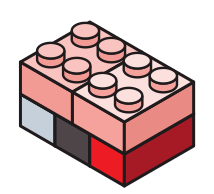
Data centres need cooling around the clock and throw away the heat they remove. Planned together, the cooling plant can supply heat to the buildings next door.
In the kit: Cooling block, servers and controls, and a heat pump.
- How much of the server heat is usable, at what temperature and in which hours?
- How large the cooling plant, the heat pumps and the storage should be, sized together
- How many hours of free cooling the site gets, and what that saves
- Which neighbourhood or industrial users can take the heat, and how far to pipe it
- What the heat sales are worth against the extra investment
How a kit project runs
Screen
Start from the kit and the data you already have: building list, rough demands, the candidate heat and cooling sources. A first Sympheny model shows whether the kit fits the site and what range of cost to expect.
Optimise
Configure the kit for the site. Sympheny sizes every component and the hourly operation together, then compares variants (which concept is built) across scenarios (how demand, prices and connection rates develop), phase by phase.
Deliver
A Heatnet Global partner consultant, or the Sympheny team, takes the chosen concept forward. The model stays with the project owner and is updated as the project grows, rather than ageing in a report.
Under the hood, every variant and scenario is a full mixed-integer optimisation of sizing and hourly operation together. The same engine is used for heat-network planning and low-temperature networks across Europe.
Built for the people who have to decide
Project owners and municipalities
Get a heating or cooling concept built on a proven kit, with sizes and phasing optimised for your site, without commissioning a custom study from scratch.
Owners of waste heat
Find out what your heat is worth, as process heat, power, cooling or to the neighbours, what it takes to use it, and in which order to build.
Consultants and suppliers in the network
Use Sympheny to configure kits for your clients, with the Sympheny team behind you on modelling questions.
What each side brings

Heatnet Global
An international network for decarbonising heating and cooling, with more than 100 technology suppliers, consultancies, operators and investors, active in 20 markets. Heatnet Global is a partner in the European DHC Academy led by Euroheat & Power, and brings the kits, the supplier base and the experienced people who deliver.
heatnetglobal.com
Sympheny
A cloud platform for planning multi-energy systems, spun out of Empa in the ETH Domain. Planners model a site, district or network and let the optimisation engine find the cost- and CO₂-optimal design. Sympheny brings the planning engine, and a team of energy-optimisation specialists behind every model.
How Sympheny worksTogether, Heatnet Global and Sympheny teach the Decarbonizing Heat micro-credential at Mohawk College's School of Climate Action in Hamilton, Ontario. View the course
Bring us a site
Have a community, campus, industrial site, data centre or buildings that overheat in summer that could fit one of the kits? Send us a short note. We will look at it together with Heatnet Global and come back with what a first screening would take.
christopher.mclaren@sympheny.comHelpful to include
- Where the site is, and roughly how many buildings or how much heating and cooling demand
- The heating and cooling sources you have in mind, including any waste heat
- Which kit you think fits, if you already know
- Your timeline and where the project stands today
Planning a project on your own? See pricing or book a demo.